Summer Beach Kid Embroidery File: A Real-World Review
As a designer who has spent years stitching up custom apparel and creating assets for small businesses, I know that the difference between a cute digital image and a high-quality finished product often comes down to one thing: how the design behaves on actual fabric. When I first received the Summer Beach Kid Embroidery File, my immediate thought wasn't about the marketing copy, but rather how this specific machine embroidery design would translate from a screen to a tote bag or a baby onesie.
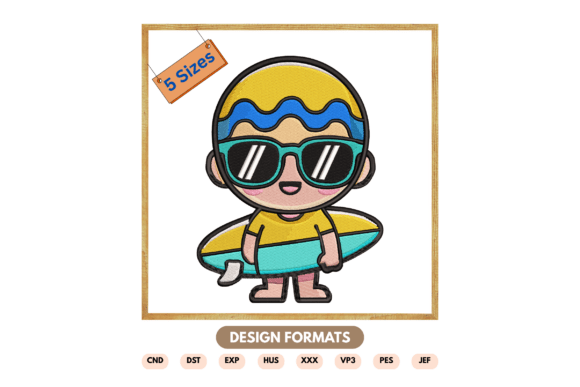
This isn't just another generic summer clipart; it is a distinct embroidery file featuring a cartoon boy with sunglasses and a surfboard. In this review, I am putting that concept through the wringer of real-world application. We are going to look at how this design holds up when stitched into a boutique collection, what kind of stitch density creates the best visual impact, and where you need to be careful before hitting the start button on your machine.
The First Stitch: Mood and Visual Personality
The moment you open the file and see the layout, the vibe is unmistakably relaxed. The Summer Beach Kid Embroidery File captures that effortless coastal energy without feeling cluttered. For an embroidery project intended for kids or beachwear, the character design strikes a perfect balance between detailed enough to be interesting and simple enough to stitch cleanly. The sunglasses and surfboard elements create a natural focal point that works exceptionally well as a standalone logo or a central graphic.
When I visualize this in a custom apparel setting, the mood is immediately cheerful and inviting. It screams "vacation mode," which makes it a fantastic candidate for seasonal collections. However, as a professional reviewer, I have to ask: does the design hold its shape? The cartoon style relies heavily on clean lines, so the execution of the satin stitch versus the fill stitch areas becomes critical. If the artist over-stitched the edges of the surfboard, the crispness of the design could get lost in the thread bulk. Fortunately, the initial inspection suggests a balanced approach that should result in a sharp, professional-looking handmade product.
Real-World Scenarios: From Tote Bags to Nursery Decor
Let's imagine a concrete scenario. You are preparing inventory for a local craft fair or refreshing your Etsy shop for the upcoming holiday season. You decide to use the Summer Beach Kid Embroidery File on a set of canvas tote bags. This is a classic move, but not every design works on canvas. Canvas has a rougher texture than fine cotton, and if the thread colors don't pop against the weave, the design looks muddy.
In this case, the bold outlines of the surfer boy cut through the canvas texture beautifully. The design feels substantial enough that it doesn't get swallowed by the heavy fabric. Now, shift the scenario. Imagine this same design on a soft, white baby sweatshirt for a personalized gift. Here, the stakes are higher. Parents want something gentle yet durable. The embroidered patch aesthetic of this file translates perfectly here because the rounded shapes of the cartoon boy avoid the harsh angles that can sometimes irritate sensitive skin or snag on velcro.
I also see potential for this design in home decor. Picture a linen pillow cover or a kitchen towel. The digital embroidery file fits the casual, breezy theme of a beach house perfectly. When used on a tea towel, the horizontal orientation of the surfboard element aligns naturally with the rectangular shape of the item. This shows that the design assets were created with versatility in mind, allowing you to pivot from selling small shop products like hats to larger items like blankets without losing brand consistency.
Where to Exercise Caution: Fabric and Structure Limits
While the Summer Beach Kid Embroidery File is versatile, no single design is a magic bullet for every situation. As a designer, I always advise testing before committing to a full production run. There are specific scenarios where this design might struggle.
- Small Hoop Sizes: If you are working on a cap or a small pocket, check the dimensions carefully. While the design is cute, complex details can get lost if the hoop size is too tight. If the boy's face is too small relative to the available space, the eyes and mouth may blur together.
- Stretchy Fabrics: Trying to stitch this on a thin, stretchy knit like a jersey t-shirt requires a strong stabilizer. Without proper support, the running stitch and fill stitch areas might pucker, distorting the cool, straight lines of the surfboard.
- Dense Stitch Areas: If the design includes large blocks of solid color fill, ensure your machine can handle the density. On dark fabrics, a dense fill can sometimes cause the thread to break or the fabric to become stiff, affecting the drape of the garment.
- Curved Surfaces: While great for flat items like aprons or pillow covers, applying this to a curved surface like a baseball cap requires precise digitizing adjustments. If the design was not optimized for curvature, the top of the head might sit too high or low on the crown.
It is crucial to inspect the stitch density yourself. If the file is overly dense, it will be difficult to press out, leaving a hard spot that ruins the comfort of a personalized gift. Always verify that the design files match the capabilities of your equipment and the materials you intend to use.
Elevating Brand Value and Customer Trust
In the world of craft business and Etsy sellers, the quality of the embroidery speaks volumes about your brand. A sloppy stitch job can make a $30 item look cheap, while a clean, well-executed design builds trust and justifies a premium price. The Summer Beach Kid Embroidery File has the potential to elevate your commercial embroidery offerings significantly.
When customers receive a product with clear definition in the sunglasses and a smooth finish on the surfboard, they perceive the item as a high-value handmade product. This attention to detail fosters recognition and encourages repeat business. Furthermore, having a cohesive library of designs allows you to create matching sets—like a mom-and-me shirt pair or a coordinated nursery set—which increases the average order value for your creative entrepreneur ventures.
However, remember that the design itself is only half the battle. Your choice of thread colors and fabric texture plays a massive role in the final outcome. A bright yellow surfboard might look vibrant on a navy blue tee but invisible on a pastel background. Always test your color combinations to ensure the finished product matches your vision.
Practical Designer Notes for Success
Before you start stitching up a batch of merchandise, follow these essential steps to ensure the Summer Beach Kid Embroidery File performs flawlessly:
- Test on Scrap: Never skip the scrap fabric test. Use the exact same fabric and stabilizer you plan to use for the final product to check for puckering or tension issues.
- Review Stabilizer Needs: Depending on the fabric weight, you may need tear-away, cut-away, or sticky-back stabilizers. Proper stabilization is key to maintaining the shape of the embroidery design.
- Check Licensing: If you are planning to sell finished items made with this design, confirm the commercial licensing terms. Some digital embroidery files are for personal use only, while others allow you to sell a limited number of units.
- Mockup Visually: Create a black and white mockup to see how the contrast works. This helps you visualize the design's clarity without the distraction of color.
- Inspect Small Details: Zoom in on the digital preview to ensure that tiny details, like the strings on the sunglasses or the grip on the board, are large enough to stitch clearly.
By approaching the Summer Beach Kid Embroidery File with a critical eye and a practical mindset, you can transform a simple digital file into a standout piece of summer embroidery. Whether you are decorating a baby outfit for a new arrival or stocking your boutique with fresh seasonal goods, this design offers a fun, reliable foundation for your next creative endeavor. Just remember: the best results come from preparation, testing, and a clear understanding of how your tools interact with your materials.